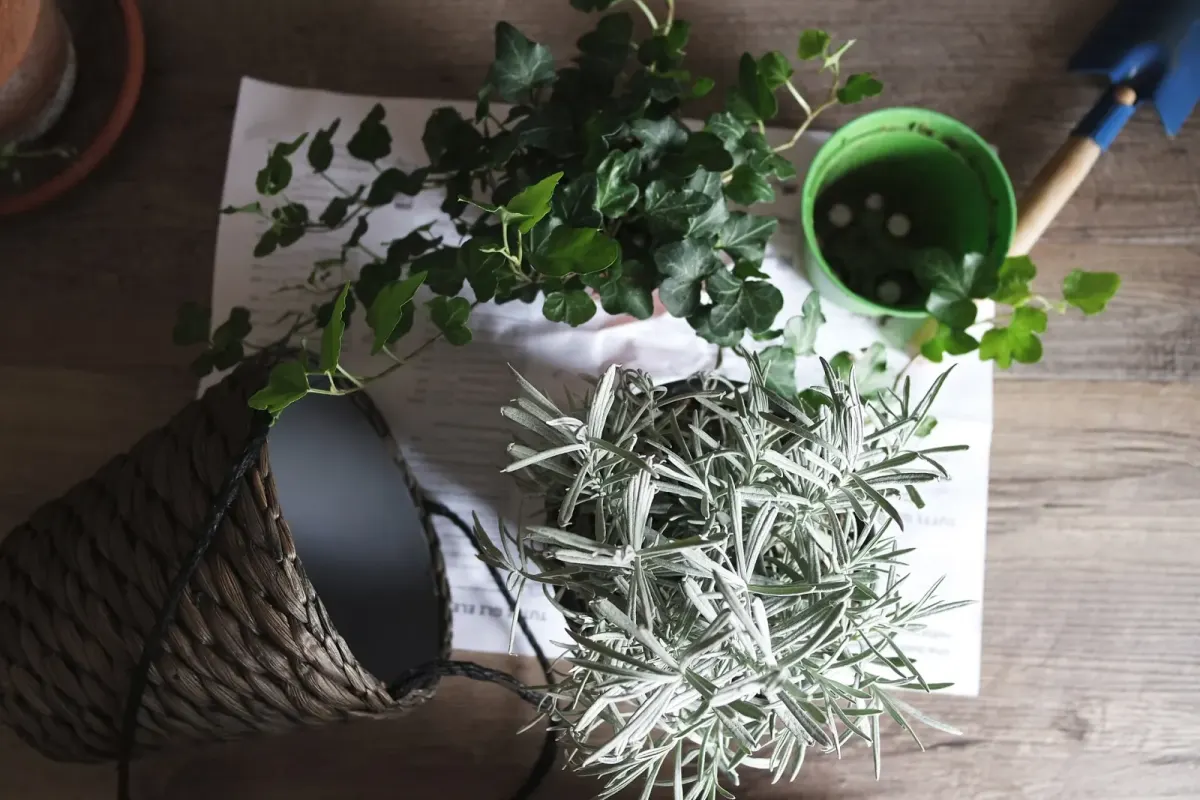
Last March we spent a long Saturday morning on a table in the workshop, repotting every plant we own. It is one of our favourite jobs of the year, and it is easy to do badly, so here is how we go about it.
When a plant is ready
Early spring is the right moment because the days are lengthening and roots are just about to grow. A plant moved then recovers within a couple of weeks, while one moved in midwinter simply sulks. The plant will usually tell you it is ready. Look for roots pushing out of the drainage hole, water that runs straight through without soaking in, or a plant that wilts a day after you have watered it.
Not every plant needs more room. Lavender and most herbs prefer to be a little snug, and a pot that is too large keeps the soil wet and the roots cold.
A gentle way to do it
Choose a pot only one size larger, two or three centimetres wider than the old one. Water the plant the day before, then slide it out and loosen the outer roots with your fingers. If they have circled the bottom of the pot, tease them apart; if they are dead and brown, trim them back with clean scissors.
Set the plant at the same depth as before, since burying the stem invites rot. Fill around it with fresh compost, using a gritty mix for lavender, and press down lightly. Water well once, then leave it in its usual light and do not feed for a month. The ivy in the photograph went on to put out new leaves within three weeks.