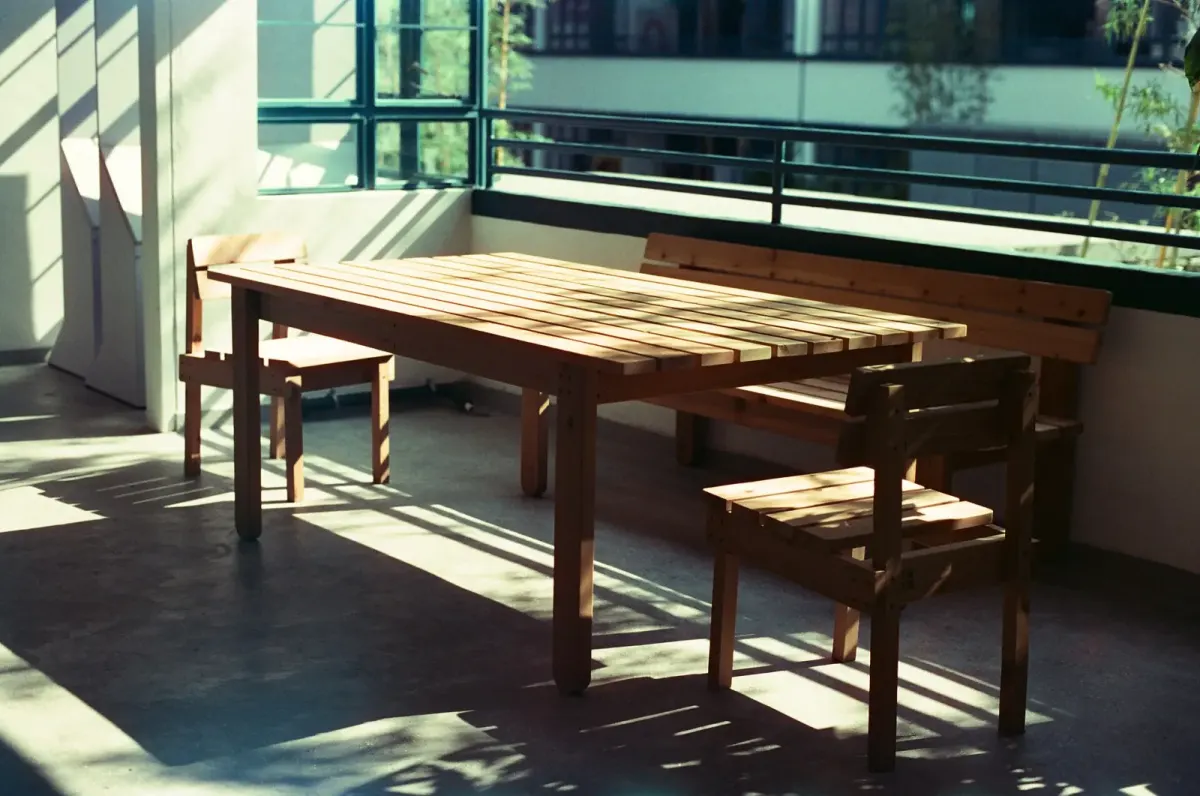
The table in this photograph is a plain slatted pine one, built from timber of a single size, and it is the piece clients talk about long after the rest of the room has been forgotten. We have a firm view about where a table should go, and it is nearly always next to the window.
Put it where the light is
A table within an arm's length of glass gets the best light of the day for letters, homework or peeling potatoes. It also keeps people facing outwards, towards a tree or a roofline, instead of towards a wall. We leave about ninety centimetres between the table edge and any counter or cupboard door, so a chair can be pulled out without a negotiation.
If the window is large, resist the urge to dress it. Here the glass runs almost to the floor and there is no curtain at all. In the afternoon the sun comes in low and lays long stripes across the concrete, which is a decoration we could never have drawn.
Letting the wood do the work
A slatted top is honest about what it is. The gaps between the boards let crumbs through, and they also let the light through, so the table looks lighter than it is. Keep it narrower than you think you need: eighty centimetres is plenty for two people facing each other, and it leaves room to walk around.
A bench against the wall seats extra guests and tucks out of the way when you are on your own. Oil the timber once a year with a plain hard wax oil and accept the rings that mugs leave behind. We would always rather have a table that is used every day and marked than one kept for best.