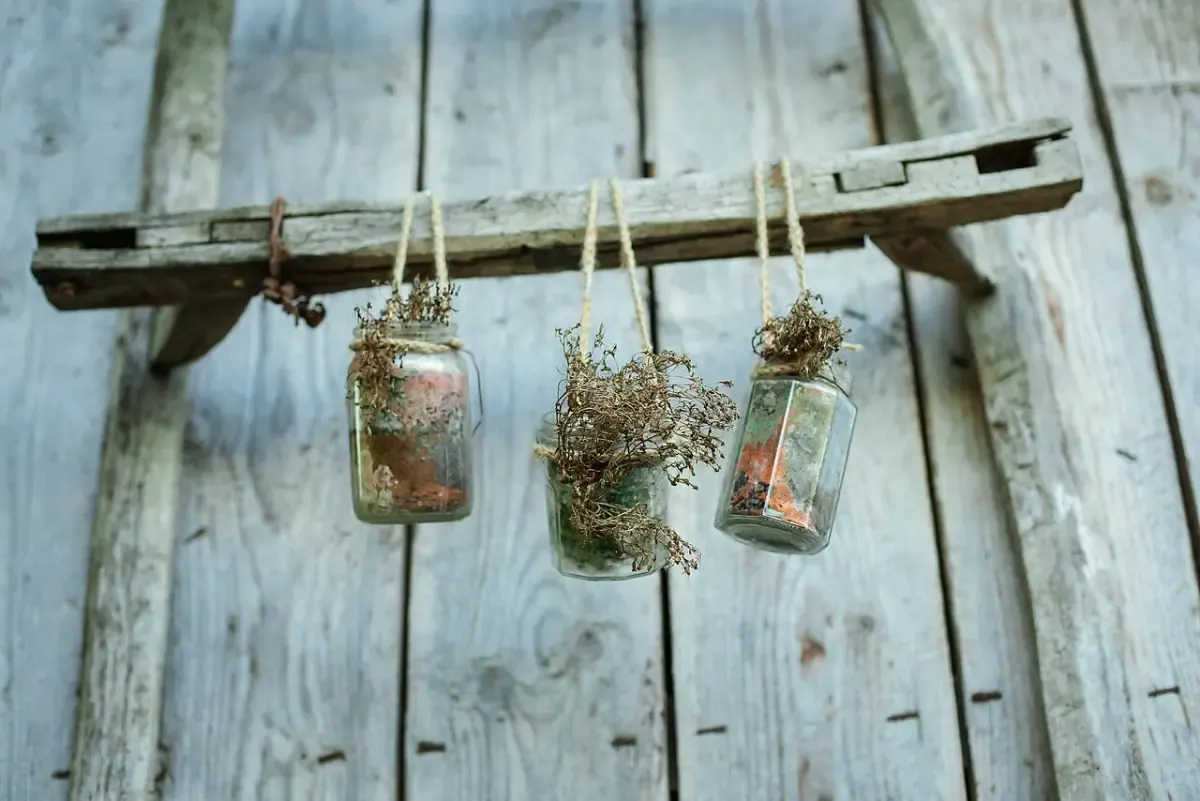
There is a beam in our workshop yard that used to belong to a cart. It has no job now, and for a long time it had nothing on it. Last winter we hung three jars from it, and they have become the part of the yard people stop at.
Why jars
A jar is the cheapest container there is, and it comes with a free lesson in how roots behave. You can see the soil, the moisture and the moss at once, which makes it much easier to tell when something is wrong. The glass also keeps a small pocket of humid air around the plant, so moss and tiny ferns that would sulk in an open pot do well inside.
We use whatever jars come our way. Old preserving jars with a rusted collar, six-sided honey jars, a pickling jar with a chipped rim. They do not need to match. The twine does the matching for them, and so does the weather on the wood behind.
What goes in, and in what order
Jars have no drainage hole, so everything depends on the layers you put in them. We build each one from the bottom up:
- A thumb-deep layer of small gravel or broken terracotta.
- A thin sprinkle of horticultural charcoal, which keeps the water smelling clean.
- Peat-free compost, pressed down gently, never packed.
- Moss laid over the surface, or a small plant with its roots loosened.
Then we tie a double loop of jute around the neck, knot it twice and hang it from a nail or a hook. Glass is heavier than it looks once it is wet, so check the beam before you trust it.
Water, or the lack of it
Most jar gardens die of kindness. Give them a tablespoon of water, not a cupful, and only when the moss begins to look pale. In winter we sometimes go three weeks without touching them. Hung outdoors under an overhang they catch a little rain on their own, which is usually enough.
A jar garden is a small promise that you will look at it, not a promise that you will water it.
The dried ones
The middle jar in our row holds dried thyme stems that we never took out. We expected them to look sad. Instead they have turned a pale biscuit colour and catch the low sun beautifully, and they hold their shape better than anything green would at this time of year. We have stopped thinking of them as dead and started thinking of them as the winter planting.
When spring comes we will take the stems out and tuck a few fresh cuttings into the same soil. Until then they stay where they are.